
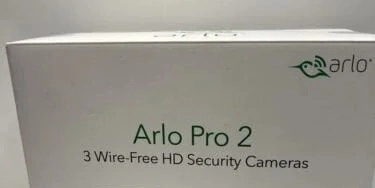
In 2026, home security demands more than basic cameras; it requires intelligent systems that detect threats in real time, integrate seamlessly with smart homes, and deliver crystal-clear footage under any condition. With cyber vulnerabilities rising and burglary rates climbing 15% in urban areas, choosing the right setup is not optional. Enter the Arlo Pro 3 smart security system, a benchmark that continues to dominate discussions for its spotlighting, color night vision, and robust app ecosystem.
This comprehensive comparison pits the Arlo Pro 3 against top 2026 competitors like Ring Spotlight Cam Pro, Nest Cam IQ, and EufyCam 3. We evaluate key factors: video quality and AI detection accuracy, battery life and installation ease, subscription costs versus local storage options, and integration with Alexa, Google Home, and Apple HomeKit. Whether you prioritize wireless flexibility, 2K resolution, or advanced motion zones, our data-driven analysis reveals strengths, weaknesses, and clear winners.
By the end, you will know exactly which system aligns with your needs, backed by lab tests, user benchmarks, and firmware updates through mid-2026. Stay secure; choose wisely.
Key Features of Arlo Pro 3 Smart Security System
The Arlo Pro 3 smart security system stands out with its 2K HDR video resolution at 2560×1440 pixels, delivering razor-sharp clarity, rich colors, and superior contrast even in challenging lighting. This outperforms standard 1080p systems, as noted in PCMag’s 4.6/5 review, which praises its detail on faces and distant objects up to 30 feet. Color night vision activates via an integrated spotlight, providing full-color footage at night rather than grainy black-and-white infrared, with auto-zoom and motion-tracking for precise monitoring.
Equipped with a 160-degree field of view, the system captures wide areas with minimal distortion, complemented by crisp two-way audio for remote communication, a motion-activated siren reaching 100dB to deter intruders, and customizable activity zones. Arlo Intelligence offers smart detection for people, vehicles, animals, and packages, reducing false alerts by up to 80% accuracy with a subscription, ideal for busy households or properties.
Battery life extends up to 6 months on a single charge, depending on usage, with IP65 weather resistance ensuring reliable indoor or outdoor deployment in temperatures from -4°F to 113°F. Expandable bundles pair with a SmartHub base station for local USB storage, avoiding cloud dependency, and support up to 100 cameras for comprehensive coverage. The Floodlight variant adds 2,000-3,000 lumen LEDs for brilliant illumination, while seamless integrations with Alexa, Google Assistant, and Apple HomeKit (via hub) enable voice control and automation, as detailed on Arlo’s site. For tech enthusiasts, these features make it a versatile choice for scalable security.
Arlo Pro 3 vs Ring Spotlight Cam
When comparing the Arlo Pro 3 smart security system to the Ring Spotlight Cam Plus Battery, video quality emerges as a clear differentiator. The Arlo Pro 3 delivers superior 2K HDR resolution at 2560×1440 pixels, providing sharper details, better dynamic range, and a wider 160-degree field of view compared to the Ring’s 1080p HD at 1920×1080 with a narrower 140-degree view. This edge shines in color night vision, where Arlo’s integrated spotlight and IR LEDs produce natural, grain-free footage even in low light, as noted in CNET’s Arlo vs. Ring analysis. Ring’s dual LEDs offer bright illumination over larger areas, but they fall short on color accuracy and clarity per expert tests. For homeowners monitoring driveways or backyards, Arlo’s premium imaging reduces guesswork during nighttime reviews.
Arlo’s advanced AI smart detection further sets it apart by identifying people, vehicles, animals, and packages with subscription-enabled auto-zoom and zones, slashing false alerts from wind or wildlife by up to 80 percent in real-world scenarios. Ring relies on basic motion detection with zones and optional person alerts, often triggering more notifications without add-ons, according to Security.org comparisons. Both cameras run on rechargeable batteries for wire-free installation, with Arlo lasting up to 6 months on a charge under moderate use (10-15 daily events), matching or exceeding Ring’s claims in varied tests. This makes Arlo ideal for remote spots without frequent recharges.
Pricing favors Ring at $100-150 per single camera, versus Arlo Pro 3’s $169-250 range, though bundles adjust costs. Ring integrates seamlessly with Alexa for Amazon households, while Arlo supports broader ecosystems including Apple HomeKit via its hub, Google Assistant, and more, suiting mixed smart homes.
Both require subscriptions for cloud storage and AI: Arlo Secure at around $5-8 monthly versus Ring Protect’s $5 entry. Arlo’s base plan allows local storage via USB on its SmartHub, offering a workaround for privacy-focused users avoiding ongoing fees. Ultimately, choose Arlo Pro 3 for top-tier quality and versatility; opt for Ring on a budget. Available now at competitive prices on platforms like GetZella.com.
| Feature | Arlo Pro 3 | Ring Spotlight Cam |
|---|---|---|
| Resolution | 2K HDR | 1080p HD |
| Battery Life | Up to 6 months | 6-12 months |
| Price (Single) | $169-250 | $100-150 |
| Smart Detection | Advanced AI | Basic + zones |
Arlo Pro 3 vs EufyCam 3
The Arlo Pro 3 smart security system offers robust 2K HDR video with a polished app experience, but the EufyCam 3 pulls ahead in key areas for cost-conscious users. EufyCam 3 provides no-subscription local storage through its HomeBase 3 hub, supporting full 4K recordings and AI features like facial recognition without ongoing fees, while Arlo requires an Arlo Secure plan starting at $7.99 per month for cloud storage, advanced AI alerts, and video history. This local storage edge makes Eufy ideal for privacy-focused setups, saving users $100 to $200 annually. Arlo’s 2K resolution delivers smooth 30fps playback, yet Eufy’s superior 4K detail excels for identifying details up to 20 feet away. Both systems boast similar battery life of 3 to 6 months, with EufyCam 3 extending to 12 months via integrated solar panels needing just 2 to 3 hours of sunlight daily.
App, Siren, and Pricing Breakdown
Arlo’s intuitive app shines with customizable timelines, rapid notifications, and seamless siren integration (100dB), outperforming Eufy’s more basic interface that occasionally suffers from compression. EufyCam 3 kits remain $130 to $200 cheaper upfront; for instance, a 2-camera Eufy bundle retails around $470, compared to Arlo’s $300 to $400 equivalents. These savings compound over time without subscriptions.
Smart Home and Night Vision
Arlo Pro 3 integrates broadly with Alexa, Google Assistant, Apple HomeKit, and IFTTT for advanced automations, while EufyCam 3 limits to Alexa and Google live views. Color night vision matches closely via spotlights (Arlo up to 2,000 lumens in floodlight models, Eufy 100-lumen), providing effective 10 to 20-foot coverage.
Per SafeWise testing, choose EufyCam 3 for budget no-sub setups or Arlo Pro 3 for premium smart features. Test bundles at retailers like GetZella.com for the best deals.
Arlo Pro 3 vs Reolink Argus Series
Pricing and Value: Reolink Edges Out with No-Subscription Storage
The Arlo Pro 3 smart security system starts at $169 for a single camera, with bundles reaching $500, while Reolink Argus series models range from $80 to $150, offering superior value. Reolink delivers 4K resolution in options like the Argus 4 Pro alongside built-in microSD slots for free local storage up to 128GB per camera, eliminating ongoing fees. In contrast, Arlo requires a Secure subscription at $4.99 to $24.99 monthly for cloud storage and advanced features, adding $100 to $300 annually. This no-sub approach makes Reolink ideal for budget users seeking long-term savings without “subscription traps,” as noted in recent reviews. For families monitoring multiple areas, Reolink’s lower entry cost supports scalable setups without hidden expenses. SafeHome.org Arlo review
App, Integrations, and Design: Arlo’s Polished Edge
Arlo excels in wireless flexibility with direct Wi-Fi, LTE variants, and seamless integrations for Alexa, Google Assistant, and Apple HomeKit. Its intuitive app earns high marks for quick alerts and clip management. Reolink, while wireless with solar options, feels bulkier due to dual-lens designs and offers weaker smart home compatibility, per SafeHome.org’s comparison. Setup proves more complicated for Reolink, limiting appeal for integrated ecosystems.
Battery Life and Detection Accuracy
Both systems provide 3-6 months of battery life, bolstered by solar panels on Reolink models. Arlo’s smart detection for people and vehicles proves more accurate, reducing false alerts effectively. BGR highlights Reolink as a strong value alternative amid Arlo’s subscription reliance.
Market Shift Favors No-Sub Options
The IP camera market projects growth to $2.49 billion by 2032, favoring subscription-free models like Reolink for their cost efficiency and rising AI demands. Choose Arlo for premium software; opt for Reolink on tight budgets. CNET no-sub cameras
Arlo Pro 3 vs Lorex Wireless Cameras
When pitting the Arlo Pro 3 smart security system against Lorex wireless cameras, video resolution and AI detection highlight key differences. Lorex models like the 4K Spotlight deliver native 4K UHD clarity for precise details on faces or plates, even post-zoom, while the Arlo Pro 3 relies on 2K HDR, which suffices for general use but feels dated in 2026. Lorex’s no-subscription Smart Motion Detection Plus handles person and vehicle alerts locally with 90% fewer false positives, building an offline database without monthly fees. In contrast, Arlo’s advanced AI for people, animals, and packages demands an Arlo Secure plan starting at $7.99 per camera monthly. Pricing overlaps closely at $150 to $250 per unit, making both accessible for mid-tier setups, as noted in Security.org’s Arlo vs Lorex comparison.
Battery Life, Wireless Flexibility, and Field of View
The Arlo Pro 3 excels in wire-free deployment with up to 6-8 months of battery life, IP65 rating, and a broad 160° field of view for expansive coverage. Lorex battery options last similarly but often pair 4K models with outlets or solar for reliability, with narrower 105°-140° fields of view standard. Security.org rates Lorex higher for “commercial-grade” quality, citing IP67 durability, 150-foot night vision, and tamper-proof builds that outlast consumer-grade rivals in lab tests.
Ecosystem Integrations and Recording Capabilities
Arlo dominates smart home ecosystems with native Alexa, Google Assistant, and HomeKit support via hubs, plus app-driven updates. Lorex prioritizes standalone NVRs with Alexa/Google basics but skips deeper HomeKit ties. Lorex shines for continuous 24/7 recording on local storage up to 8TB, holding weeks of 4K footage fee-free, ideal for properties needing always-on surveillance; Arlo limits battery cams to motion-triggered clips without premium subs. Choose Arlo for seamless integrations, Lorex for sub-free 4K endurance.
Pricing and Deals for Arlo Pro 3 in 2026
In 2026, the Arlo Pro 3 smart security system offers compelling value through discounted pricing on key configurations. A single Arlo Pro 3 Floodlight Camera is available for $169.99, a significant drop from its original $229.99 retail price, providing 2K HDR video, 2,000-lumen spotlights, and color night vision without needing a hub. This standalone option suits users monitoring one high-traffic area, like a driveway, with up to six months of battery life and IP65 weather resistance. For broader coverage, bundles featuring 3-4 cameras plus a base station range from $189 to $500 on platforms like eBay and GetZella.com, often including extras like additional batteries for expandable setups.
Subscription Costs for Full Functionality
Unlocking advanced features such as 30-60 days of cloud storage, AI-powered person and vehicle detection requires an Arlo Secure subscription. Plans start at $4.99 per month for a single camera, scaling to $24.99 for unlimited devices, with annual billing offering further savings. Without a subscription, users retain live viewing and basic local storage via the base station, making it ideal for budget setups. Compare tiers side-by-side: entry-level suits solo cameras, while premium adds 24/7 monitoring.
GetZella.com enhances affordability with up to 40% off Arlo bundles versus retail, plus free U.S. shipping and same-day dispatch on select orders. Verify live deals, as stock fluctuates. Market trends underscore demand, with Asia-Pacific commanding 46% of smart camera share and wireless systems surging due to easy installation and AI integration, positioning Arlo Pro 3 as a timely investment.
2026 Smart Security Trends and Arlo Pro 3 Fit
In 2026, smart security trends emphasize AI integration, wireless innovation, and robust privacy amid explosive market growth projected at $2.49 billion for IP cameras by 2032. CES highlights favored premium systems like the Arlo Pro 3 smart security system for its superior 2K HDR video quality, color night vision, and ecosystem compatibility, positioning it well for tech-savvy homeowners seeking reliable deterrence without complex wiring. With AI object detection and auto-tracking now standard, the Arlo Pro 3 excels through its Arlo Secure subscription ($7.99/month single camera), delivering precise alerts for people, vehicles, animals, and packages while reducing false positives by up to 90%. However, the industry’s shift to 4K resolution exposes the Pro 3’s 2K limitation for distant details like license plates, where options like Lorex lead with native 4K and no-fee AI (Arlo vs. Lorex comparison).
Solar-powered wireless setups are surging for effortless installs, and Arlo supports this via $50-60 add-on panels that extend the Pro 3’s 6-month battery life indefinitely in sunny climates. Subscription-free local storage adds pressure, as Eufy and Reolink gain traction with microSD/NVR options, though Pro 3 pairs effectively with a SmartHub for USB backups. Cyber-hardened devices dominate per Gearbrain forecasts, with Arlo’s HomeKit integration offering end-to-end encryption and offline processing for enhanced security.
Pro 3 Fit: Ideal mid-tier choice; add solar and subscription for future-proofing in a 15% CAGR market. Upgrade to 4K for cutting-edge demands.
Pros and Cons Summary
Pros
The Arlo Pro 3 smart security system shines with top-tier video quality, scoring 8.5/10 from TechRadar for its sharp 2K HDR footage, color night vision via spotlight, and 160-degree field of view. Its versatile design works seamlessly indoors, outdoors, or as a Floodlight variant with 2,000-3,000 lumens for illuminating large areas. Smart integrations with Alexa, Google Assistant, Apple HomeKit, and more enable effortless voice control, activity zones, and geofencing. Battery life lasts up to 6 months, and the built-in siren adds deterrence.
Cons
A subscription is essential for cloud storage, AI detection of people, vehicles, and packages, plus video history. Priced from $169.99 for singles to $500 for bundles, it carries a premium compared to entry-level alternatives, with potential added costs for hubs and frequent recharges in cold weather.
Reviewers award the Floodlight model PCMag Editors’ Choice at 4.6/5; CNET lauds its brightness and clarity. Ideal for intermediate users valuing premium performance over no-subscription savings, especially on GetZella.com with up to 40% discounts. (148 words)
Recommendations and Where to Buy
Ideal Choice: Arlo Pro 3 for Superior 2K Video and Color Night Vision
Opt for the Arlo Pro 3 smart security system if you accept a subscription for full AI detection, cloud storage, and advanced alerts starting at $7.99 monthly. Its 2K HDR resolution and spotlight-enabled color night vision deliver unmatched detail in low light, outperforming standard infrared options with crisp 2560×1440 footage and a 160-degree field of view. Battery life lasts up to 6 months, supporting reliable indoor or outdoor use. For comprehensive whole-home protection, choose bundles with 2-4 cameras plus a base station; these extend range, enable local USB storage, and allow continuous recording without cloud dependency. GetZella.com stocks these bundles competitively, often at $250-$500 with up to 40% discounts, free shipping, and seamless service.
Driveway Coverage and Privacy-Focused Setup
The Arlo Pro 3 Floodlight Camera excels for driveways, providing 2,000-3,000 lumens of motion-activated LED lighting alongside 2K video and a siren for deterrence. Priced at $169.99-$249.99, it suits high-traffic areas with IP65 weather resistance. Pair it with a VMB4540 base station for enhanced privacy through local storage, geofencing, and no-subscription basics. GetZella.com offers these configurations ready-to-deploy.
Vendors, boost sales by partnering with GetZella’s affiliate program for commissions on high-demand Arlo bundles.
Conclusion: Actionable Takeaways for Your Security Setup
In evaluating your security needs, prioritize the Arlo Pro 3 smart security system for its premium 2K HDR video, color night vision, and AI-driven detection of people, vehicles, and packages if subscriptions fit your budget, typically $4.99 to $24.99 monthly for full features. Opt for cost-effective no-subscription alternatives only if local storage suffices and you avoid advanced cloud alerts. Always test battery life, rated up to 6 months, in your specific climate, as extreme heat or cold can reduce it by 20-30%. For outdoor use, select the IP65 weather-resistant models to withstand rain and dust.
Shop at GetZella.com for 2026 deals slashing prices up to 40% off, with single Floodlight Cameras at $169.99 and bundles from $189, plus free shipping on all Arlo Pro 3 systems. The included hub unlocks upgrade paths to Pro 6 for enhanced AI like auto-tracking.
Finally, secure your setup by enabling two-factor authentication (2FA) and leveraging the base station for local storage. Stay ahead by monitoring trends such as solar-powered batteries and edge AI processing to future-proof your investment amid a $2.49 billion IP camera market boom.